Product Category
Sensors & Alarms
Smart Security Sensor Devices
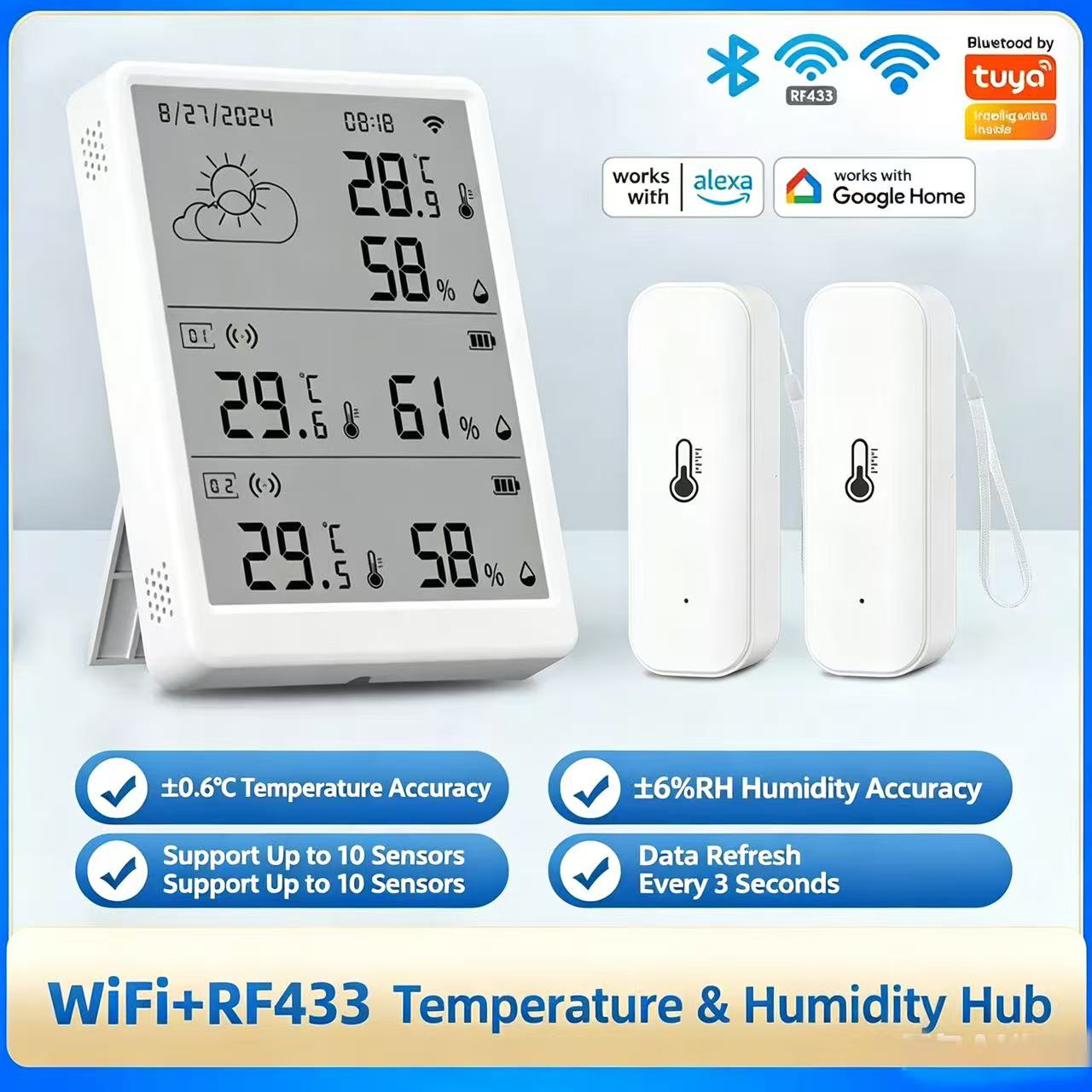
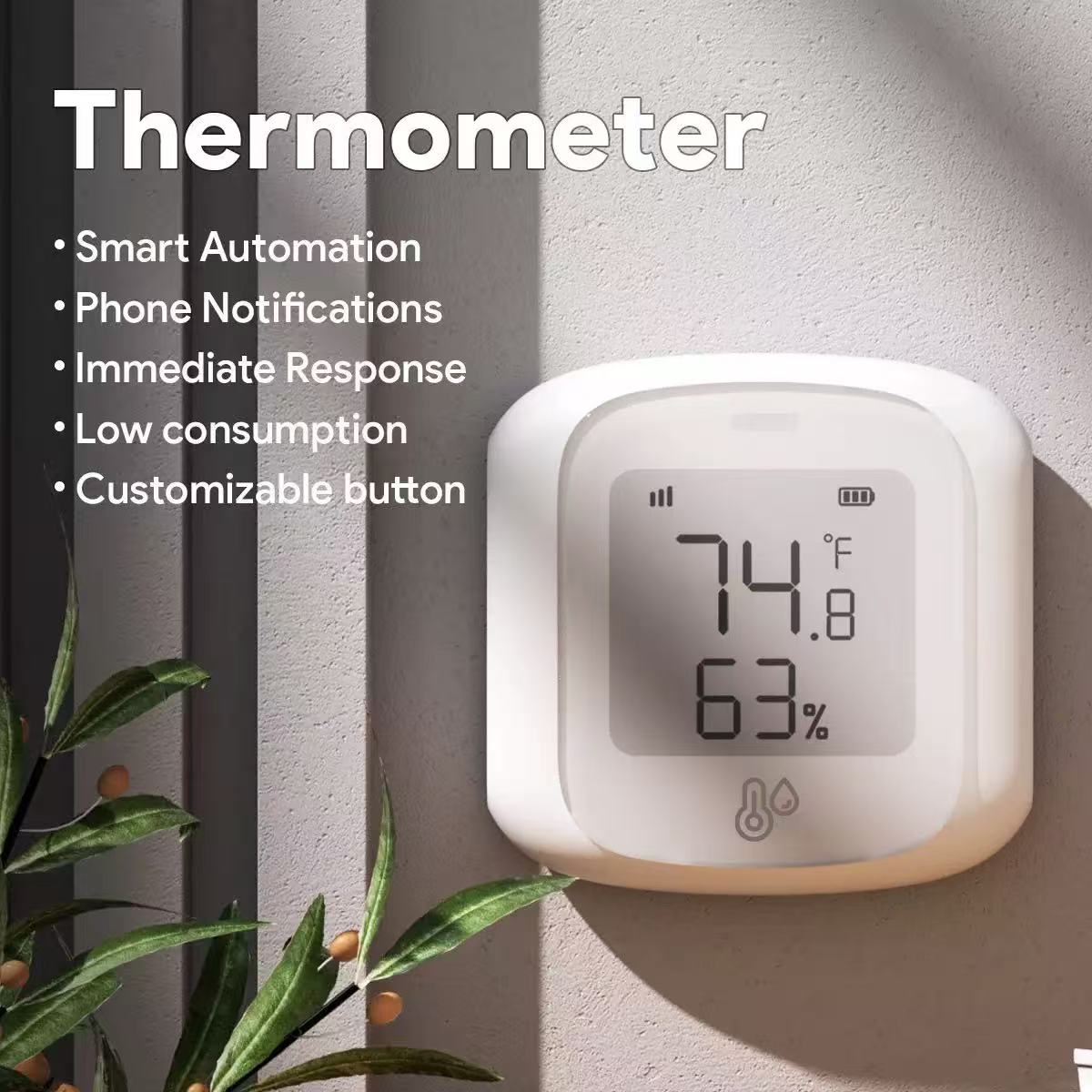
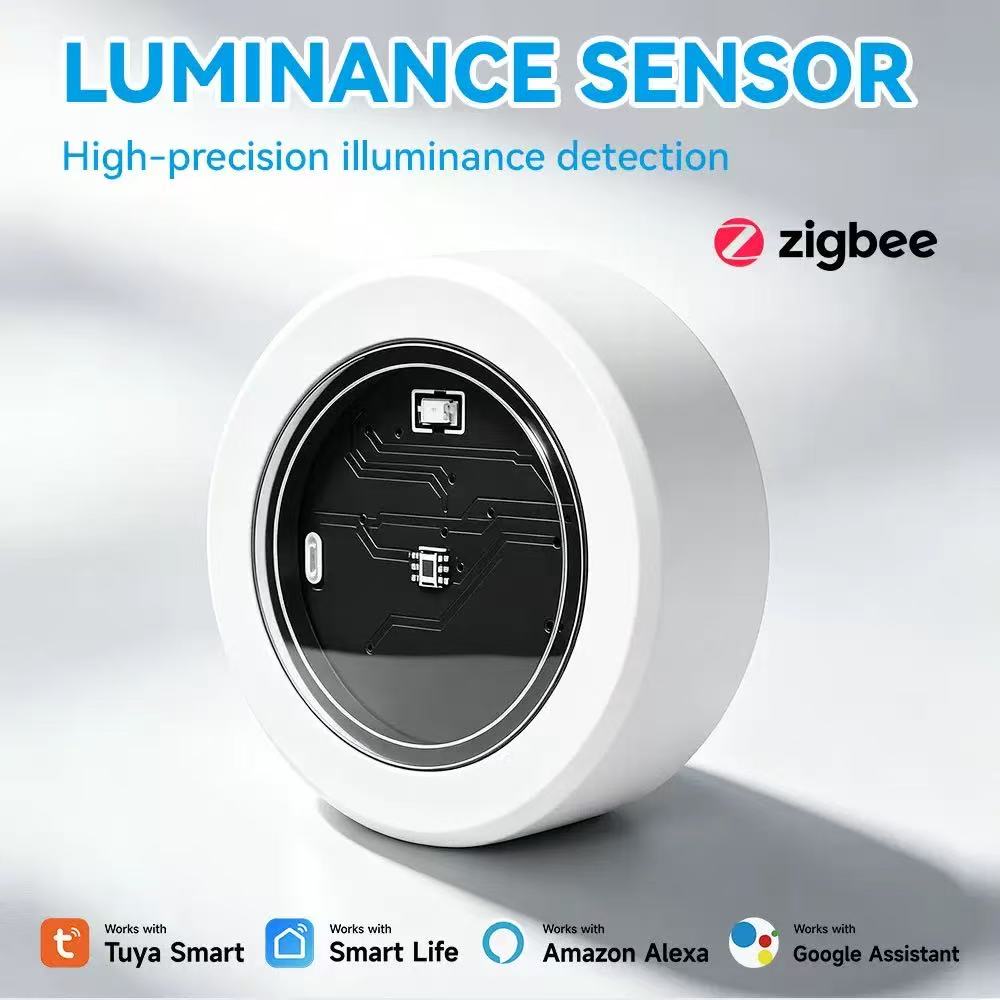
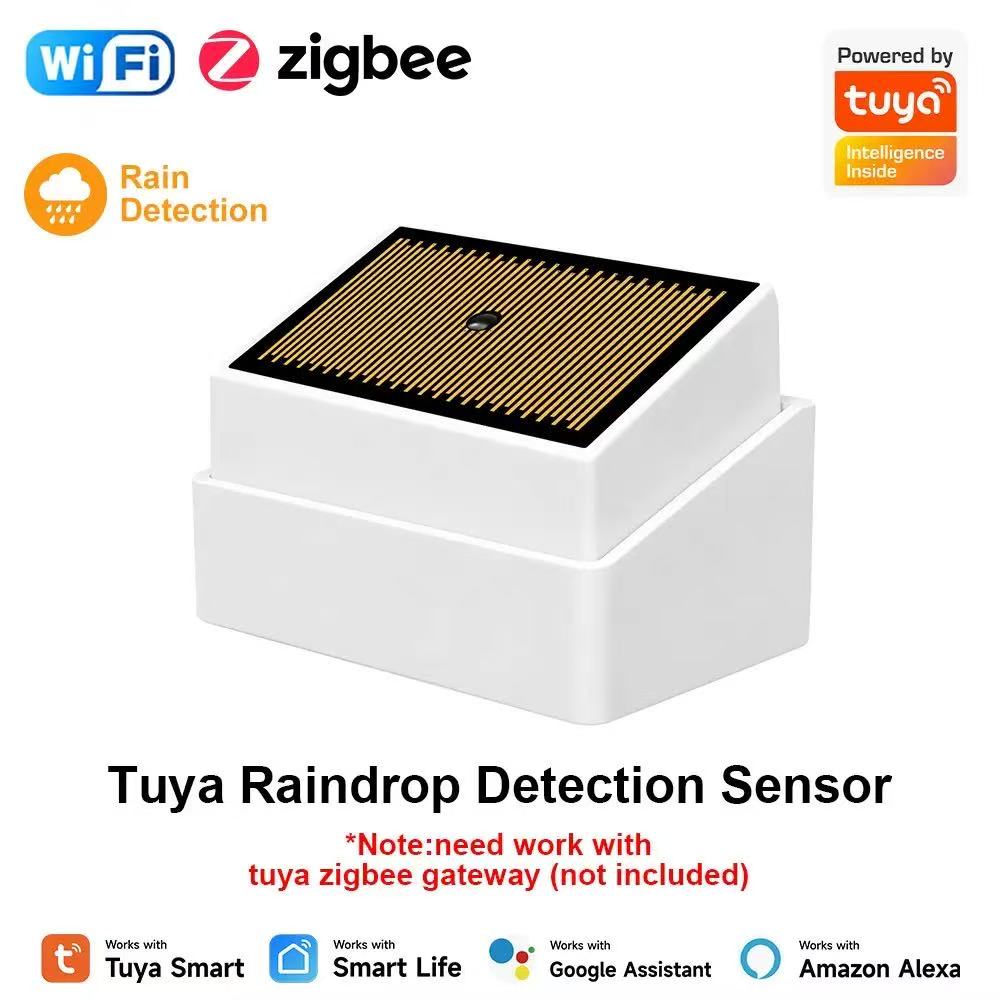
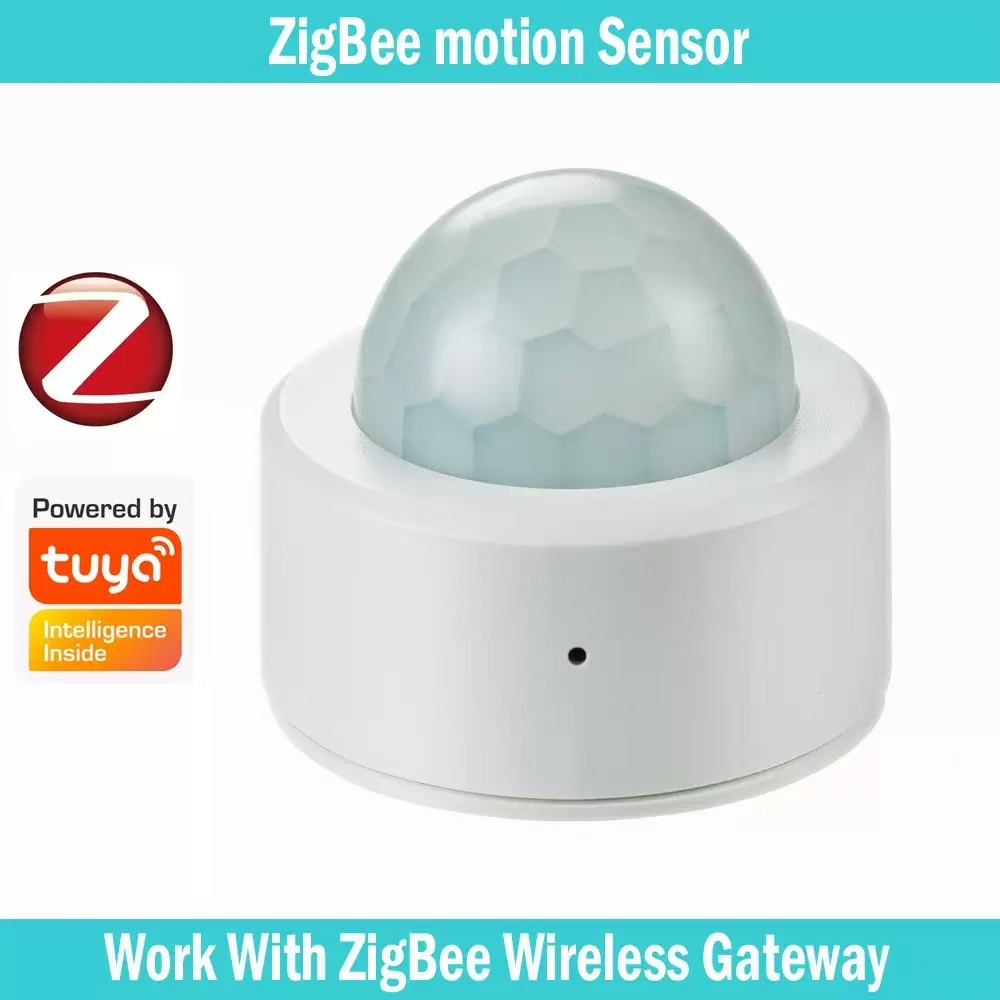
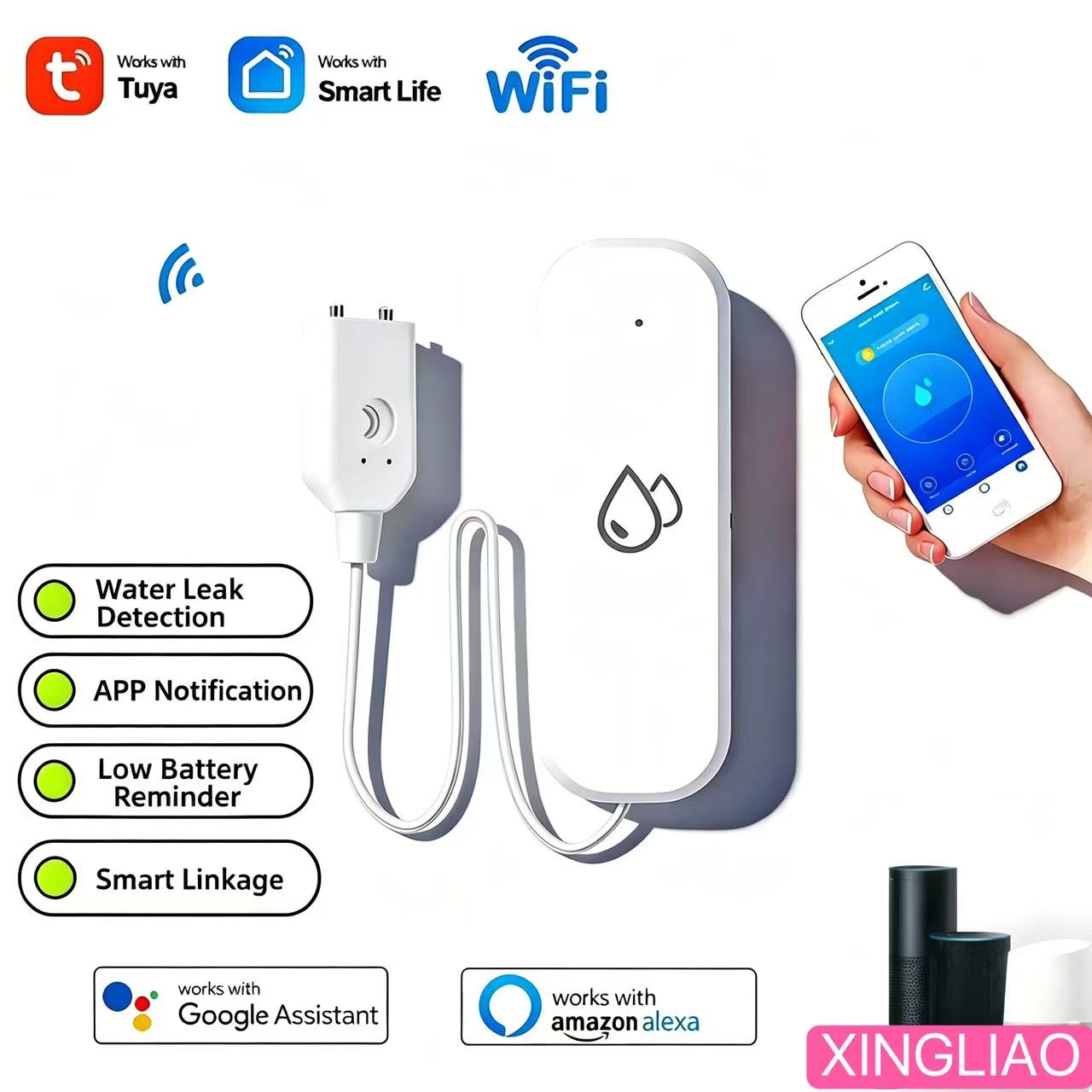
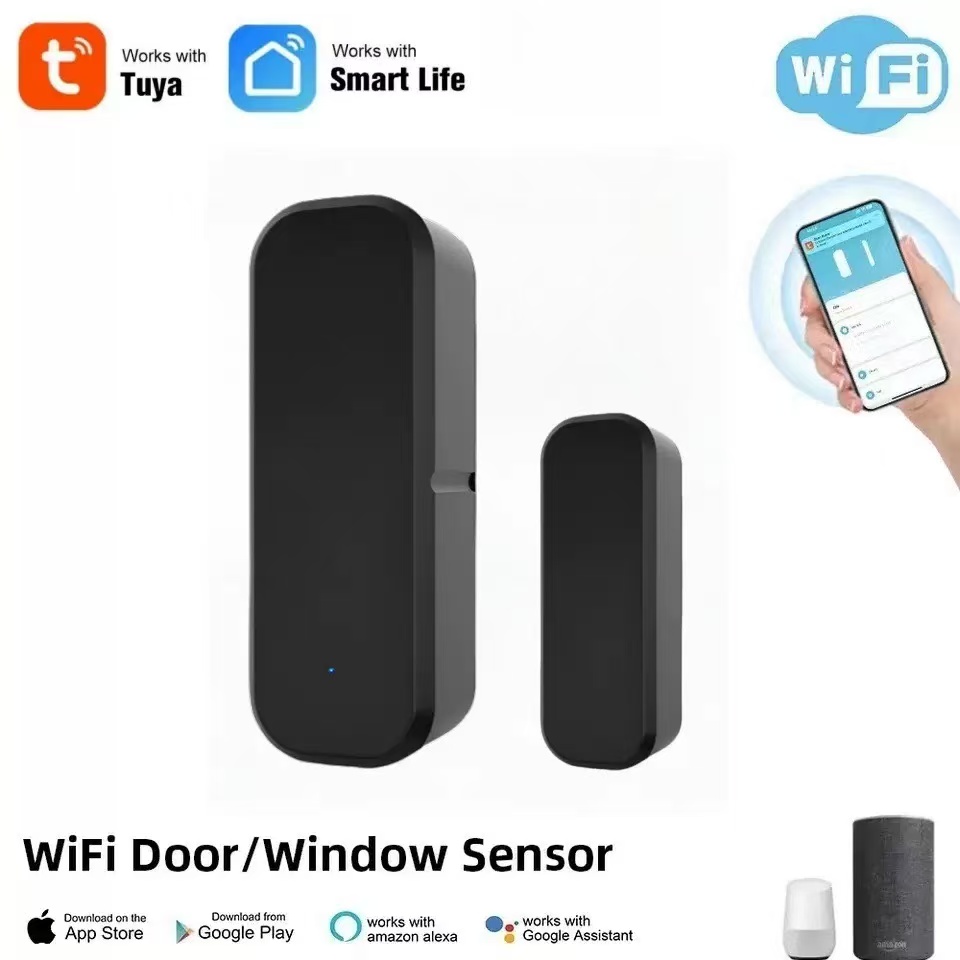
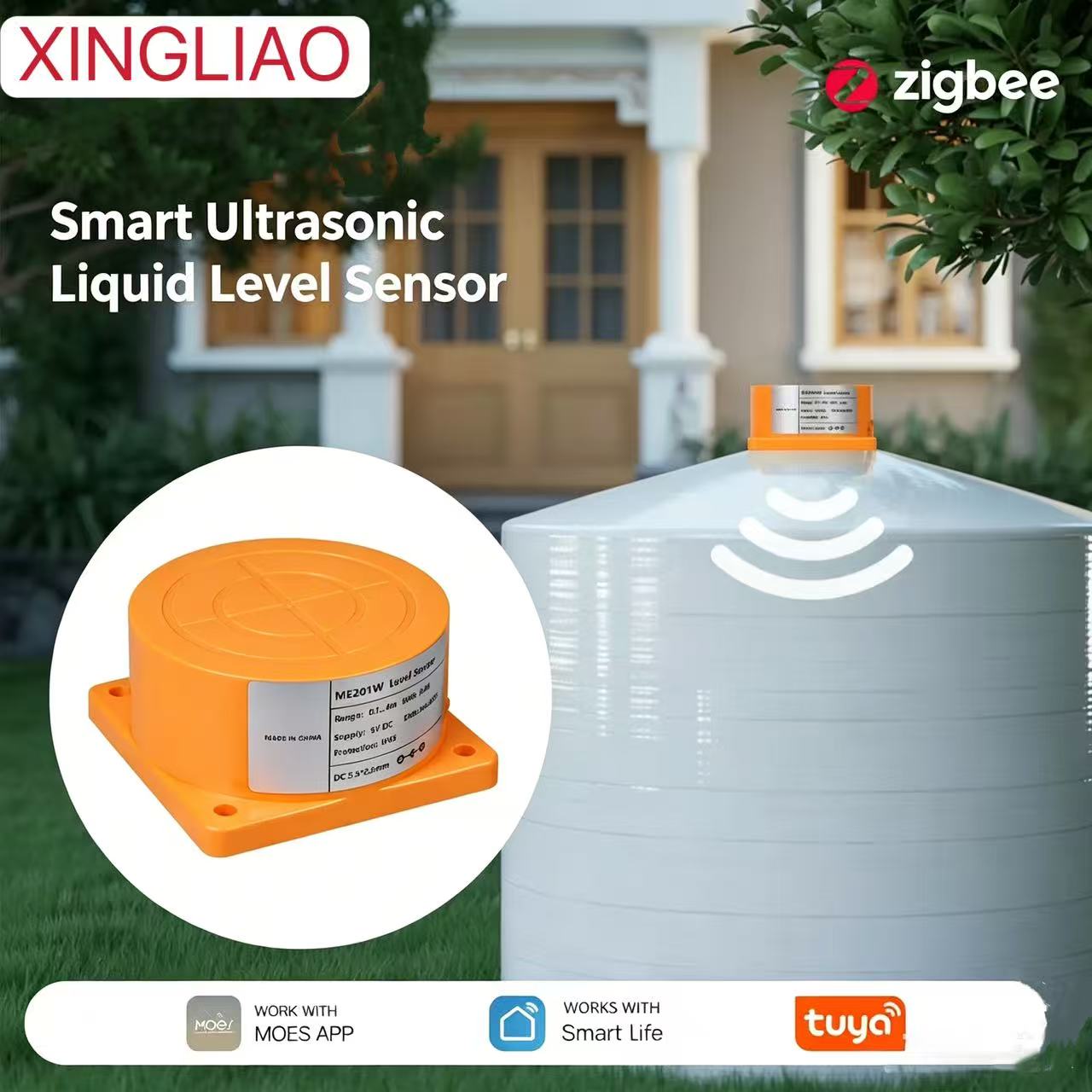
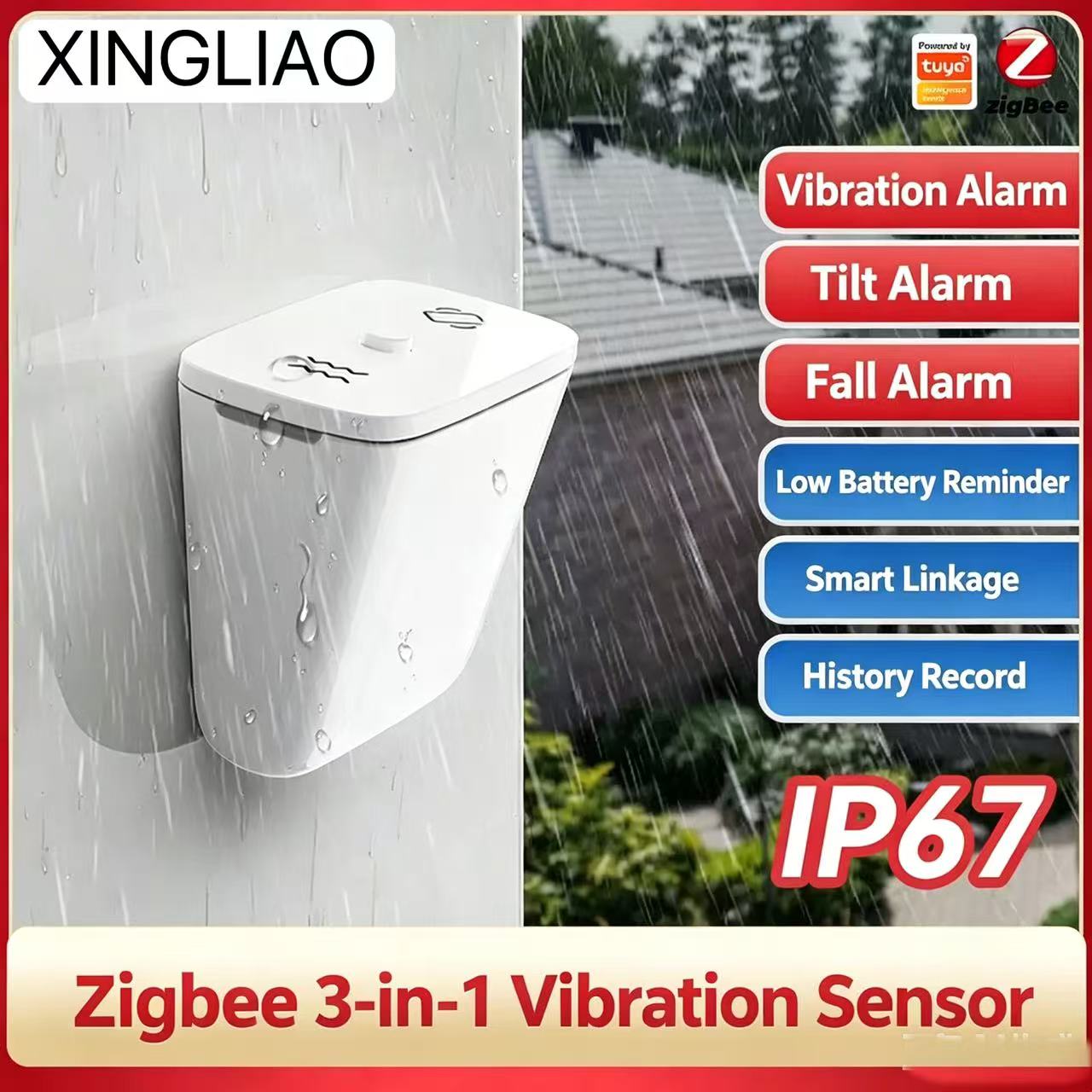
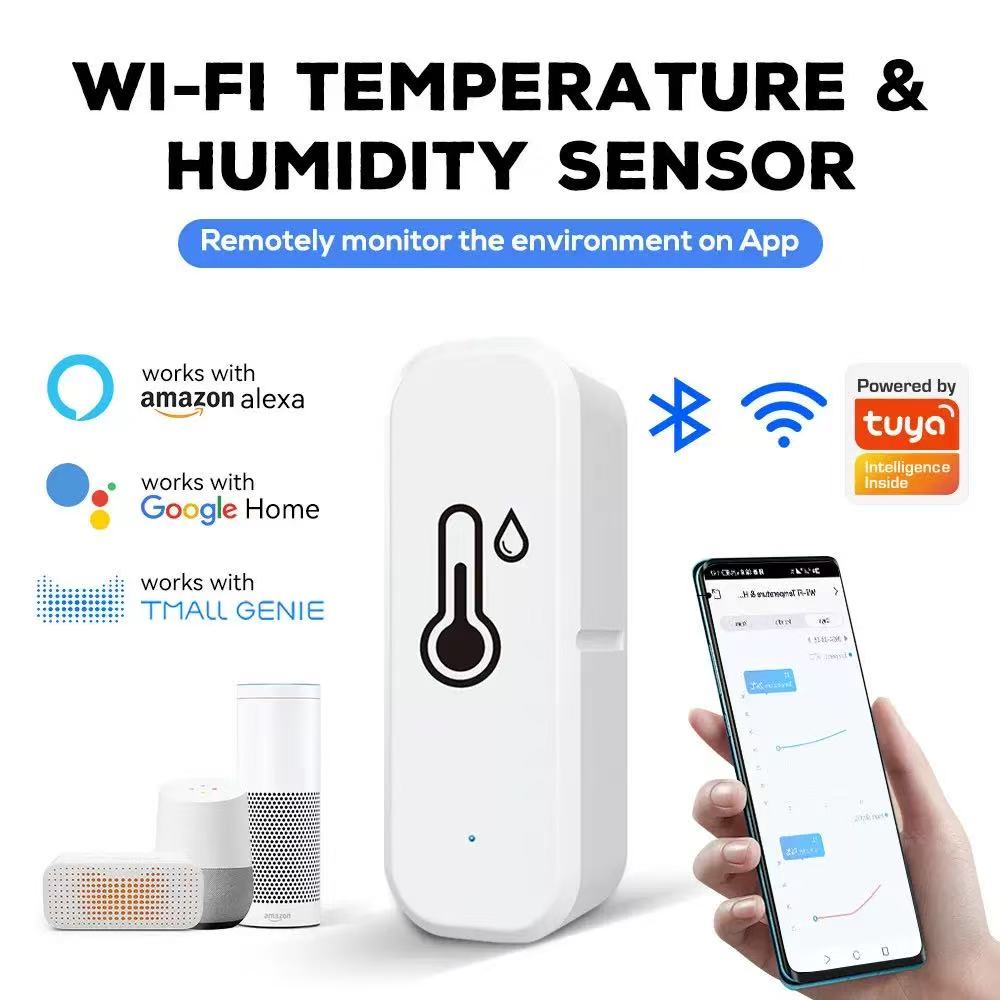
Door/window sensors, motion detectors, wireless call buttons, smoke alarms, water leak detectors. Real-time APP push notifications with smart scene linkage. Suitable for whole-home security monitoring.
Drag to scroll · 拖动浏览
Key Features
What Makes It Smart
Product Gallery
Browse Our Products
Place an Inquiry
Interested in This Product Category?
Fill out the form below and we will get back to you within 2 hours with a detailed quotation.
Sensors & Alarms — Inquiry Form
Door Window Sensor & Smart Alarm Manufacturer: Zigbee, WiFi and RF Security Sensors for OEM/ODM
XingLiao manufactures the sensor layer of a smart security system: door and window contact sensors, PIR motion detectors, smoke alarms, water leak detectors, and wireless SOS call buttons. We supply security integrators, alarm brands, and smart home distributors who need reliable sensors that pair cleanly with a hub or a Tuya-based app.
Sensors are a deceptively hard category — a door sensor that misses one event in a hundred is worse than no sensor at all, because users stop trusting the system. This page explains what we build, the protocol choices that actually matter, realistic battery life, and how we handle OEM projects.
Sensors We Manufacture
Door / Window Contact Sensors
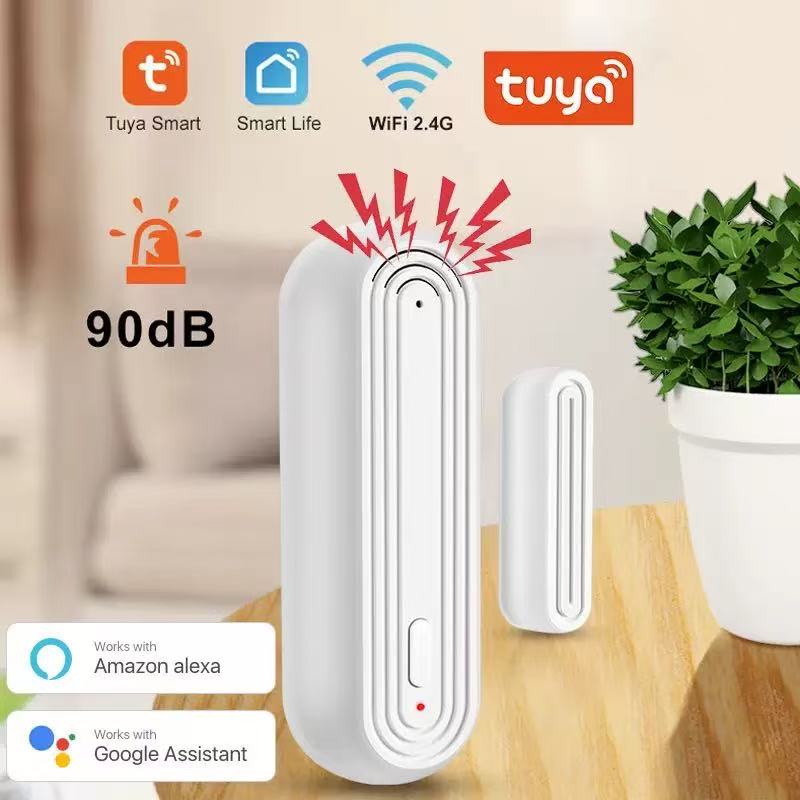
The workhorse of the category. A reed switch in the sensor body plus a magnet on the door or sash; when the gap exceeds roughly 15–20 mm, the contact opens and an event fires. Our standard units are Zigbee 3.0 or WiFi (Tuya), powered by a CR2450 or CR2032 cell, with a low-battery push notification and a tamper switch on commercial models. Typical use: entry doors, windows, cabinets, safe doors and medicine cabinets.
PIR Motion Detectors
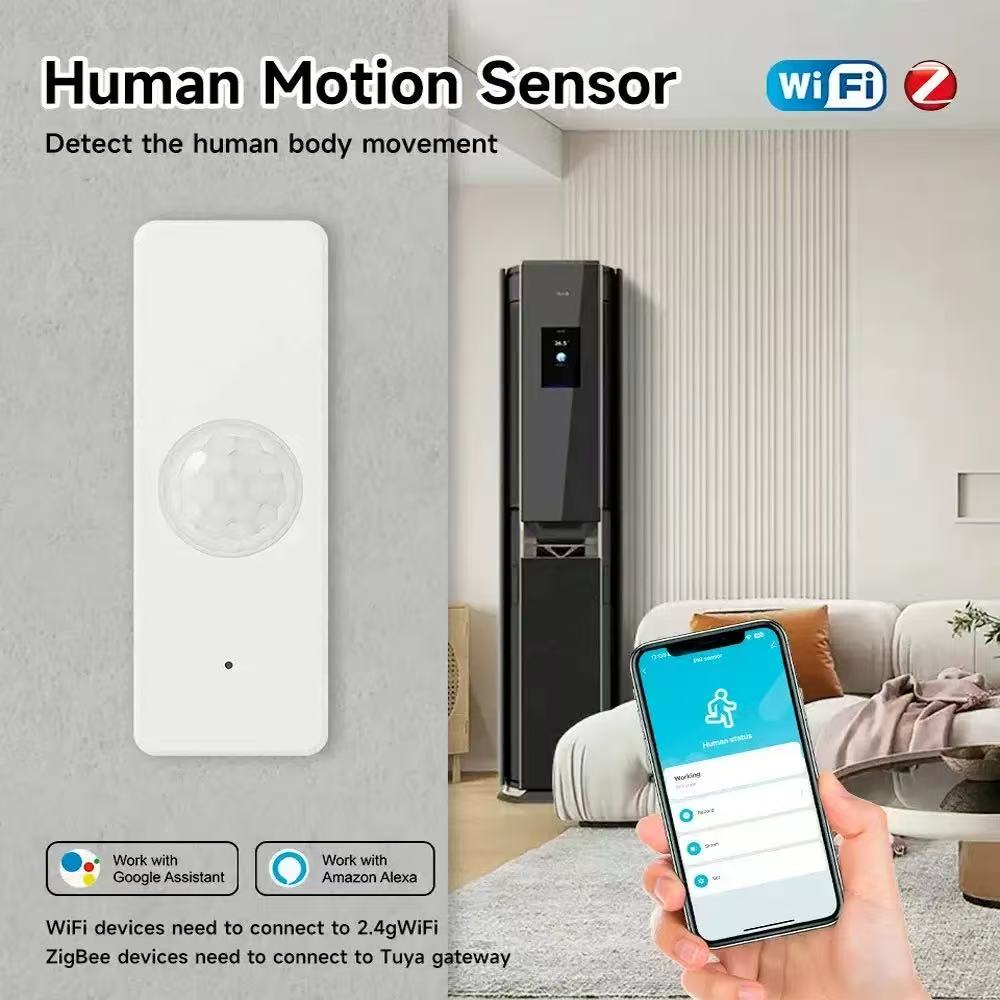
Passive infrared sensors with a 6–8 m detection range and roughly 110° coverage, with a selectable pet-immunity threshold (usually below 25 kg) so a cat does not trigger an alarm. Mounting height and lens pattern matter more than raw sensitivity, so we supply both wide-angle and curtain lenses for different placements.
Smoke Alarms
Photoelectric smoke detection with an 85 dB alarm, test button, and — on smart models — app notification when the alarm triggers. For EU and UK markets we supply EN 14604-compliant units; for the US market, UL-listed platforms are available. Smart smoke alarms are increasingly specified by landlords and holiday-let operators who need remote verification.
Water Leak Detectors
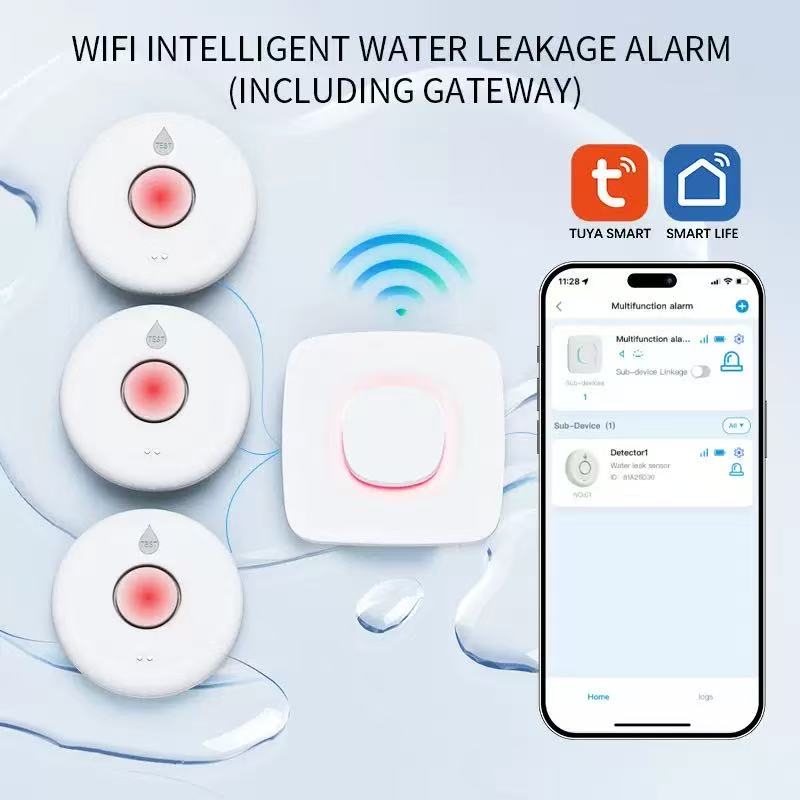
Two probe contacts on the underside detect standing water under washing machines, water heaters, sinks and basements. Once triggered, the app alerts immediately, and on hub-based systems the sensor can trigger a scene to close a motorised valve. This is the highest-value-per-dollar sensor in most installations — the cost of one undetected leak dwarfs the sensor price.
Wireless SOS Call Buttons
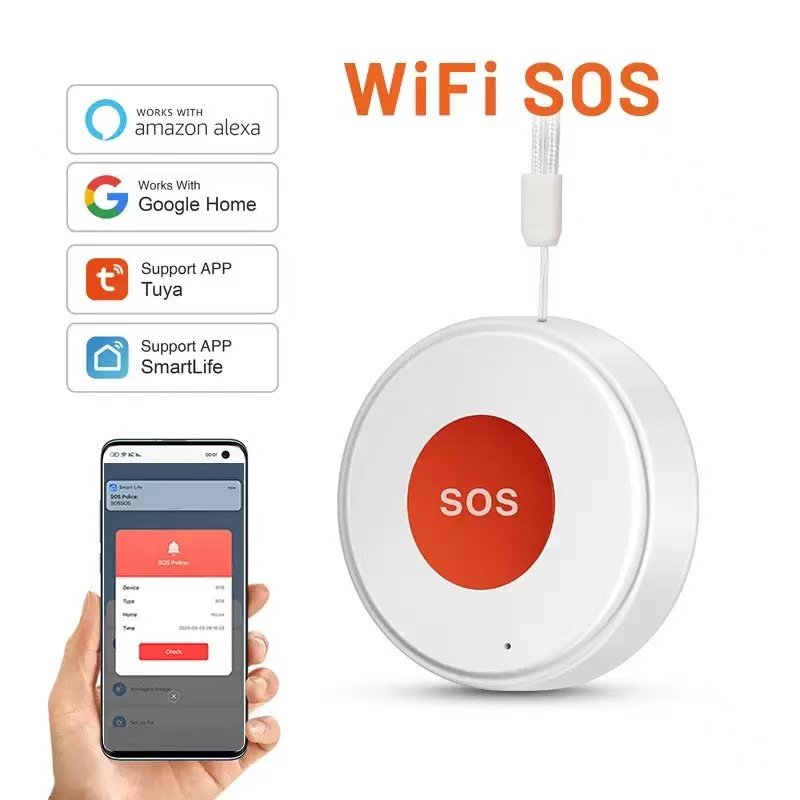
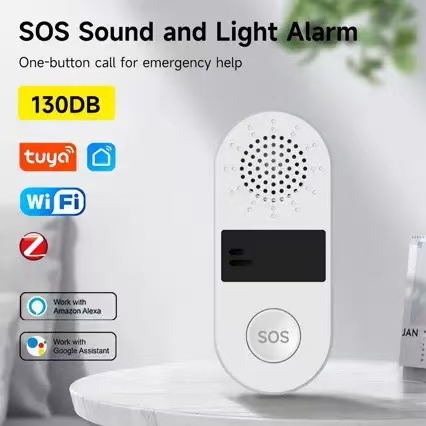
Single-button panic or assistance callers for elderly care, typically worn on a lanyard or mounted bedside. Pressing the button pushes an alert to family members’ phones and, on care-facility platforms, to a staff dashboard. This is one of the fastest-growing segments we supply, driven by ageing populations in Europe and Japan.
Protocol: Zigbee, WiFi or RF
This is the single most important specification decision, and the one buyers most often get wrong.
- Zigbee 3.0: the right default for whole-home systems. Mesh networking, very low power (1–2 years on a coin cell), and sensors keep working locally even if the internet drops. Requires a hub or a gateway — but that hub also unlocks local automations.
- WiFi (Tuya): simplest to install because no hub is needed, and it works with the Smart Life app out of the box. The trade-off is battery life — WiFi sensors typically last 6–12 months rather than 1–2 years, and each device occupies a slot on the router.
- RF 433/868 MHz: used with traditional alarm panels. Very cheap, very long battery life, but unencrypted variants are vulnerable to replay attacks, so we recommend rolling-code versions for anything security-critical.
Our recommendation: use Zigbee for whole-home installs and for any customer who will buy more than four sensors; use WiFi for single-point use and starter kits.
Key Specifications
- Protocol: Zigbee 3.0 / WiFi 2.4GHz (Tuya) / RF 433MHz or 868MHz
- Battery: CR2450 or CR2032 coin cell; 1–2 years typical on Zigbee, 6–12 months on WiFi
- Operating range: Zigbee indoor 20–35 m between mesh nodes; WiFi limited by router coverage
- Detection gap: 15–20 mm for contact sensors
- PIR range: 6–8 m, about 110° coverage, pet-immunity option
- Operating temperature: -10°C to 50°C standard; outdoor models to IP65
- Mounting: 3M adhesive pad or screw fixing; magnet and sensor body both supplied
- Alerts: app push notification, optional SMS or hub siren, low-battery warning
Scene Linkage: Where Sensors Create Real Value
A sensor on its own is just a notification. Connected to a scene, it becomes automation. Common configurations we help buyers implement: door opens between 11pm and 6am → hallway light on at 20% and camera starts recording; water leak detected → valve closes and alert escalates to two phone numbers; motion in the garage → siren chirp plus snapshot to the app; SOS button pressed → alert to all family members with the device’s location label.
OEM/ODM and Private Label
- Platform selection: choose protocol, housing and detection type based on your market and price point.
- Sampling: existing-platform samples within about a week.
- Branding: logo on housing, custom colour, retail packaging, multi-language manuals, and pre-pairing with your own hub or app if required.
- Certification: CE / FCC / RoHS standard; EN 14604 for smoke alarms; UL listing available for North American projects.
- Production: 25–35 days after deposit and sample approval.
MOQ for private-label sensors starts at 100 units per SKU on existing platforms. Sensors are low-unit-cost items, so buyers usually consolidate several types into one order to make freight and setup costs worthwhile — a typical first order mixes door sensors, motion detectors and leak detectors.
Frequently Asked Questions
Do I need a hub or gateway?
For Zigbee sensors, yes — a hub handles pairing, mesh routing and local automations. For WiFi (Tuya) sensors, no hub is needed; they connect straight to the router and are managed in the Smart Life app.
How long does the battery really last?
Zigbee contact sensors typically run 1–2 years on a CR2450 in normal use (roughly 10–20 events per day). WiFi sensors use more power and usually last 6–12 months. Both send a low-battery alert before dying.
Will the sensors work if the internet goes down?
Zigbee sensors paired to a hub keep triggering local automations (siren, light) without internet, though app notifications obviously cannot be delivered. WiFi-only sensors lose functionality when the connection drops.
Can sensors from different brands work together?
Only if they share an ecosystem. All of our Tuya-platform sensors interoperate with each other and with Tuya-compatible switches, cameras and doorbells — which is the main reason buyers standardise on one platform.
Request a Quote
Send us your required sensor types, protocol preference and target quantity, and we will return platform options, unit pricing and a sampling plan within 24 hours. Use the inquiry form on this page to start an OEM/ODM sensor project.
More Categories
Explore Other Products
Manufacturing programmes
Download the full 2026 product catalog
125 pages · 10 categories · sensors, video doorbells, cameras, smart switches, control panels, locks, gateways and home appliances — with model numbers, specifications and OEM/ODM terms.